Trade Tensions Increase

Overview: Given the government shutdown, the Federal Reserve being in an easing cycle, and rising trade tensions between the U.S. and China, investors shifted assets to the bond market over the past week. The latest economic data collected by private companies caused little reaction. As a result, mortgage rates ended the week down slightly, near their lowest levels of the year.
Ahead of a planned meeting between U.S. and Chinese officials on trade policy at the end of the month, both sides took steps to gain an advantage in the negotiations. Among other actions, China expanded restrictions on rare earth minerals, and President Trump threatened to raise tariffs on Chinese imports by an additional 100%. While it is uncertain whether trade restrictions will actually increase or whether this is mostly posturing, investors reacted by shifting from stocks to safer assets such as bonds. If these measures come to pass, one effect is that higher tariffs will raise prices, adding to current inflation levels, which would be negative for mortgage rates. However, investors anticipate that this influence will be more than offset by the resulting reduction in global economic growth, which will reduce future inflationary pressures — a positive for mortgage rates.
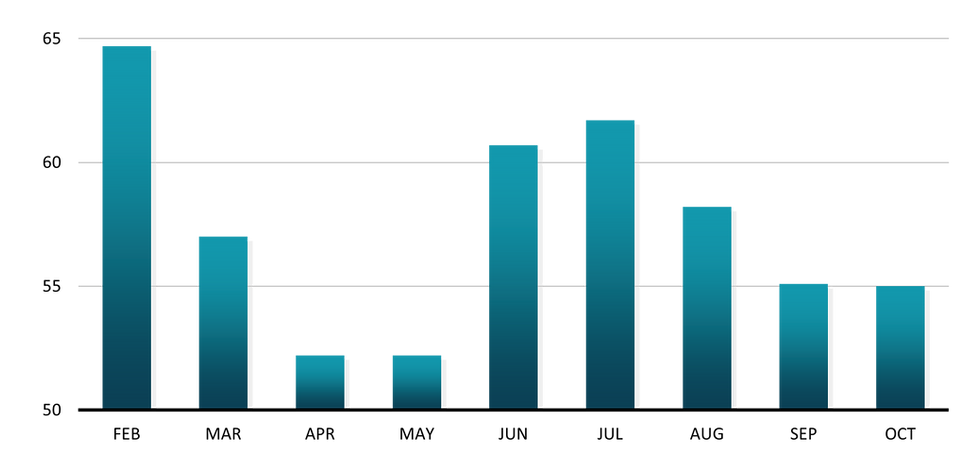
Each month, the University of Michigan releases a survey on consumer sentiment. The latest results indicated that consumers are concerned about the government shutdown and higher tariffs. The Index of Consumer Sentiment declined to 55, which was a little above the consensus forecast of 54 but the lowest level since May. Beyond the headline figure, investors also focus on the component of the report that asks about inflation expectations over the next five years. The five-year average outlook for inflation was unchanged at 3.7% per year, and the reaction to the data was minor.
In a speech on Tuesday, Fed Chair Jerome Powell said that the Fed is near the point where it will stop reducing the size of its bond holdings on its balance sheet. One action the Fed took to boost economic activity during the pandemic was to purchase massive quantities of bonds, including mortgage-backed securities (MBS), to help lower interest rates. In recent years, the Fed has been unwinding this action by letting maturing bonds roll off its portfolio without replacing them. The bond holdings jumped from about $4 trillion to a peak of roughly $9 trillion in 2022 and have since fallen back down to around $6 trillion. Powell suggested that this is likely near the proper level for current economic conditions. The potential for added MBS demand from the Fed to once again replace maturing securities was positive news.
Consumer Sentiment
Week Ahead
Investors will continue to monitor comments from government and Fed officials about tariffs and monetary policy changes. For economic reports, the government shutdown means that it will likely be another very light week. Before the shutdown, the Retail Sales report was scheduled to be released on Thursday. Since consumer spending accounts for over two-thirds of U.S. economic activity, the retail sales data is a key measure of the health of the economy. The New Residential Construction report (also known as Housing Starts) and the Import and Export Price Indexes were scheduled to be released on Friday. It has been confirmed that the Consumer Price Index (CPI), a widely followed monthly inflation indicator that monitors price changes for a broad range of goods and services, will be released on October 24.

Comments